Shared Memory for Multi-Agent Development
The first wave of AI coding adoption was assistant-driven. A developer asked for a completion, explanation, test, or refactor. The interaction happened inside an IDE, and the scope was usually local.
The next wave is agentic. AI agents are beginning to plan work, implement changes, generate tests, review code, update documentation, prepare releases, and connect to internal systems through secure interfaces. Tabnine’s platform page describes org-native agents that operate across the software lifecycle with awareness of codebases, policies, repositories, documentation, APIs, and development systems.
This shift creates a new architectural requirement. If multiple agents participate in software delivery, they cannot each operate from a different partial view of the organization.
They need shared memory.
The multi-agent problem is not just orchestration
Many teams approach multi-agent development as an orchestration problem. Which agent handles planning? Which agent writes code? Which agent generates tests? Which agent reviews the pull request? Which agent updates documentation?
Orchestration matters, but it is not enough. A well-orchestrated set of agents can still fail if each agent reasons from a different context.
A planning agent may assume one service owns a workflow. A coding agent may implement the change in another service. A testing agent may generate tests around the wrong contract. A review agent may enforce generic patterns instead of the team’s actual standards. A documentation agent may describe behavior that does not match the final implementation.
No single agent is obviously broken. The system is incoherent because there is no shared organizational memory.
| Agent role | What it needs to know | Failure mode without shared memory |
|---|---|---|
| Planning agent | Ownership, architecture, service boundaries, roadmap context | Plans work in the wrong component or misses impacted teams. |
| Coding agent | Patterns, dependencies, APIs, policies, current code state | Generates locally correct code that violates organizational norms. |
| Testing agent | Contracts, edge cases, historical incidents, quality standards | Tests the wrong behavior or misses critical regression paths. |
| Review agent | Team standards, architectural constraints, prior decisions | Enforces generic rules while missing organization-specific risks. |
| Documentation agent | Actual implementation, ownership, system relationships | Produces stale or misleading documentation. |

The answer is not to make every agent bigger. The answer is to give every agent access to the same structured understanding of the organization.
Shared memory must be organizational, not session-based
Most AI tools have some form of memory. They may remember a conversation, a project setting, or a local workspace. That can be useful, but it is not enterprise shared memory.
Enterprise shared memory must be persistent, structured, permission-aware, and continuously updated. It must reflect repositories, services, APIs, dependencies, documentation, ownership, policies, and operational history. It must be available to the agents that need it while respecting the organization’s trust boundary and access controls.
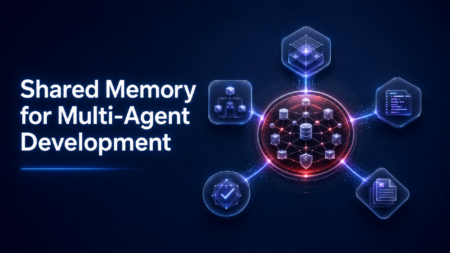
Tabnine Context Engine is designed to provide this kind of shared memory. The product page describes a shared memory layer for multi-agent systems, along with hybrid graph and vector context, real-time organizational awareness, dependency and blast radius analysis, verification against standards, and an agent-agnostic context layer.
Agent neutrality is essential. Enterprises will not standardize every workflow on one model, one IDE, or one agent. Developers already use different environments and tools, and Tabnine positions its context layer to work alongside agents such as Cursor, GitHub Copilot, Claude Code, and Tabnine.
A shared memory layer should outlast any individual agent choice.
Why shared memory improves governance
Governance becomes harder when each agent has a different view of the system. A code-generation agent can follow one set of assumptions while a review agent applies another. A testing agent can validate an implementation that should not have been generated in the first place. A documentation agent can preserve the wrong decision and make it look official.
Shared memory creates the foundation for consistent governance. If agents reason from the same structured model of architecture, policies, dependencies, and ownership, governance can move from post-hoc correction to coordinated prevention.
This aligns with Tabnine’s broader platform direction. Tabnine is a data layer, a control layer, an execution surface, and a trust boundary. The data layer is Tabnine Context Engine, the control layer is governance at generation, the execution surface is agent-neutral, and the trust boundary is self-hosted deployment.
In a multi-agent system, these layers become even more important. The more agents act, the more valuable a consistent context and governance layer becomes.
Shared memory also reduces duplicated exploration
Without shared memory, agents repeat work. The planning agent explores architecture. The coding agent explores it again. The testing agent asks for relevant files. The review agent reconstructs the design intent. Each step consumes tokens and time, often rediscovering what the organization already knows.
Structured context reduces this duplication. Agents can ask more precise questions because the environment is modeled. They can retrieve the right services, contracts, dependencies, and policies without blindly scanning the codebase. This is one reason we highlight token consumption reduction as a value of enterprise context.
The economic benefit compounds in multi-agent workflows. If five agents each spend tokens rediscovering context, the cost multiplies. If five agents share a context layer, the organization pays less for exploration and gets more consistent output.
The trust boundary matters more as memory gets richer
Shared memory for software development is sensitive. It can include architecture diagrams, dependency graphs, internal APIs, incident history, policy constraints, ownership maps, and security-relevant patterns. That is some of the most valuable technical knowledge an enterprise has.
For regulated and mission-critical environments, the shared memory layer cannot be treated as a generic cloud convenience. It must fit the organization’s deployment requirements. Tabnine emphasizes deployment flexibility across SaaS, VPC, on-premises, and air-gapped environments, with the ability to keep code and context inside the customer’s environment.
This matters because multi-agent systems expand the number of workflows that depend on context. As more agents use shared memory, the memory layer becomes critical infrastructure. It must be governed, auditable, and deployable inside the enterprise trust boundary.
The evaluation checklist for multi-agent readiness
Enterprises preparing for multi-agent software development should evaluate the context layer before they evaluate individual agents. Agents will change. Models will change. The organizational memory layer should remain stable.
| Requirement | Evaluation question |
|---|---|
| Agent neutrality | Can the same context layer support multiple coding, review, testing, and documentation agents? |
| Structured relationships | Does the system understand services, APIs, dependencies, ownership, and policies as relationships, not just documents? |
| Real-time freshness | Does context update continuously as code, docs, APIs, and policies change? |
| Governance integration | Can organizational rules guide generation and review before problems reach CI? |
| Trust boundary control | Can the memory layer run in the deployment model the enterprise requires? |
| Cost efficiency | Does shared context reduce duplicated exploration and token consumption across agents? |
A multi-agent future without shared memory will be noisy, expensive, and difficult to govern. A multi-agent future with shared memory can be coherent, efficient, and aligned with how the enterprise actually builds software.
The platform layer for agentic development
The enterprise AI coding category is moving beyond individual assistants. The question is no longer whether a single tool can generate useful code. The question is whether many AI systems can collaborate inside a complex engineering organization without creating chaos.
That requires more than orchestration. It requires organizational memory, governance, and trust.
Tabnine Context Engine provides the shared context layer that multi-agent software development needs. It allows agents to reason from the same understanding of repositories, services, dependencies, APIs, ownership, and policies, while giving enterprises control over where that knowledge lives and how it is used.
As software development becomes more agentic, shared memory will become one of the defining platform requirements.
Explore how Tabnine provides shared memory for multi-agent software development.