The Hidden Cost of Context-Blind AI Coding
AI coding tools are often evaluated on visible productivity. How much code did they generate? How quickly did the developer complete the task? How often were suggestions accepted?
Those metrics are useful, but they do not tell the whole story. The real enterprise question is what the generated code costs after the first draft appears.
Context-blind AI can create a long tail of hidden costs. It explores repositories blindly. It consumes unnecessary tokens. It introduces dependencies that fail security or license checks. It generates code that violates architecture patterns. It increases review burden for senior engineers. It pushes avoidable problems into CI, security review, and rework.
The code arrives faster. The organization may still move slower.
Tabnine Context Engine is built on a simple premise: model quality alone is not enough. AI needs to understand the environment it is operating in. When that understanding is missing, organizations pay for it in tokens, time, review cycles, and risk.
The visible productivity gain can hide the system cost
A developer asks an agent to implement a feature. The agent produces a plausible answer in seconds. On the surface, this looks like a productivity win. But the first answer is not the full economic unit.
The real unit is the full path from request to merged, compliant, secure, maintainable code. That path includes prompt iterations, repository exploration, dependency selection, code review, security scanning, CI failures, rewrites, retesting, and future maintenance.
| Cost category | What context-blind AI tends to do | Why it matters |
|---|---|---|
| Token consumption | Searches broadly, repeats context gathering, and sends oversized prompts | Inference cost rises while signal quality may not improve. |
| Code review | Produces code that is locally correct but misaligned with architecture | Senior engineers spend time correcting organizational issues. |
| CI and security rework | Introduces dependencies, patterns, or configurations that fail downstream checks | Work is discarded and regenerated after attention has already been spent. |
| Developer flow | Forces developers to translate implicit organizational knowledge into prompts | The productivity burden shifts from writing code to supervising AI. |
| Long-term maintainability | Adds inconsistent patterns and unnecessary abstraction | Review becomes harder and vulnerabilities become easier to miss. |
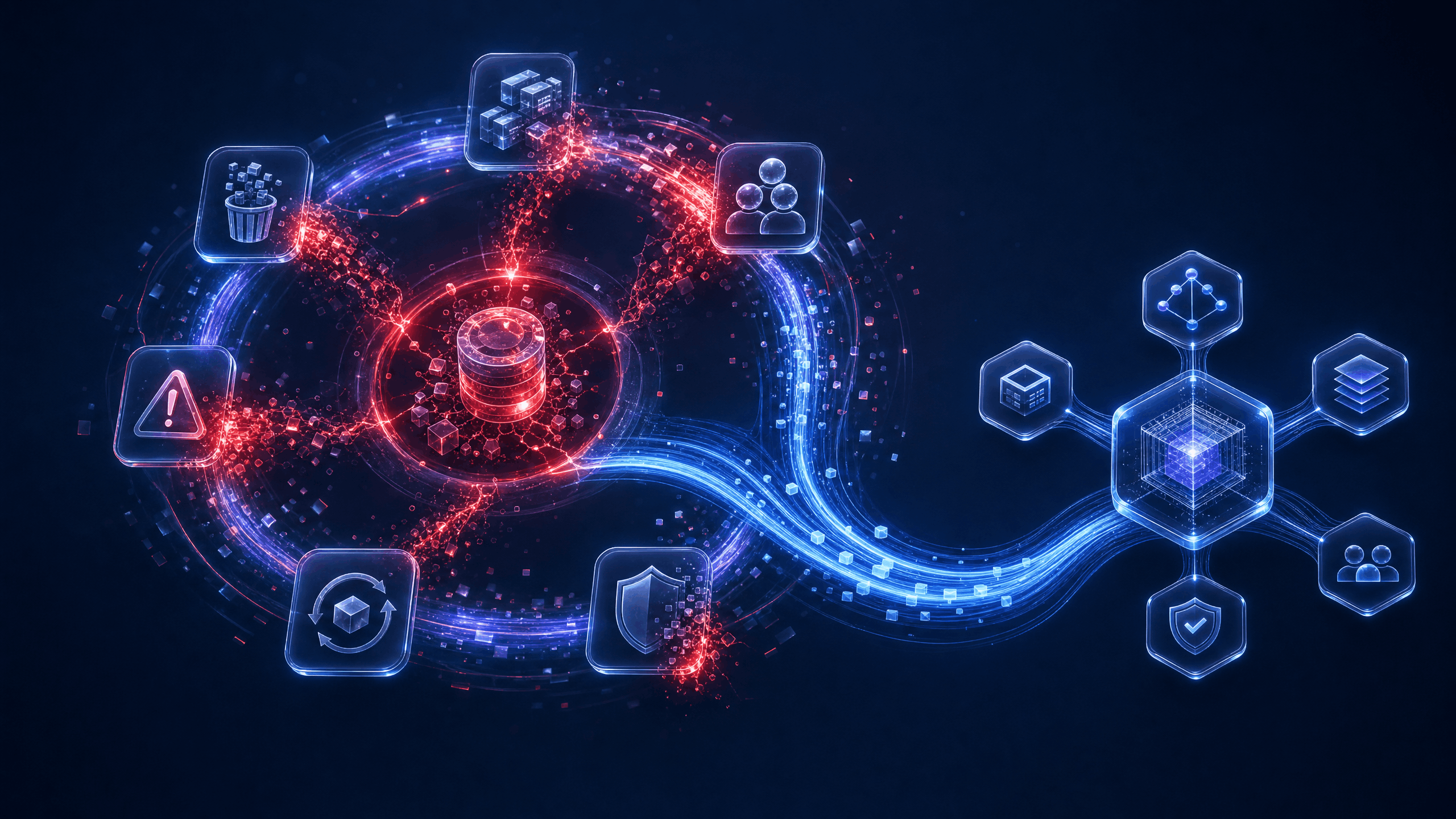
These costs do not always appear in a dashboard. They show up as slower pull request throughput, overloaded reviewers, noisy CI, repeated prompting, and a growing sense that AI is helpful but not yet trustworthy for important work.
Token waste is a symptom of missing structure
One of the most immediate costs of context-blind AI is token consumption. If an agent does not know where to look, it explores. It loads more files. It asks for broader context. It retrieves documents that are semantically related but structurally irrelevant. It repeats the process when the first answer misses the mark.
The organization pays for that exploration in inference spend and latency. Developers pay for it in waiting time and supervision. Reviewers pay for it when the answer still reflects an incomplete understanding of the system.
Enterprise context can reduce token consumption by up to 80% by eliminating blind exploration. That value proposition matters because token savings are not separate from quality. When the agent starts from the right organizational context, it can use fewer tokens and produce better-aligned output.
Tabnine Context Engine should therefore be understood as a cost-control layer as well as a quality layer. It gives AI systems a structured map of repositories, services, dependencies, APIs, ownership, and policies so they can reason over the relevant context instead of searching blindly.
Rework is where AI productivity goes to disappear
The second hidden cost is rework. A context-blind agent can select a library that violates license policy, call an API through the wrong service boundary, ignore an internal error-handling pattern, or produce a pull request that requires multiple rounds of architectural correction.
An AI agent picks a dependency, writes the integration, and the developer opens a PR. CI then fails because the library has a known CVE, uses an incompatible license, or was removed from the approved registry after an incident. The developer throws away the work and starts over.
That is not just a security issue. It is an economic issue. The agent was fast, but the workflow was slow.
The same pattern applies beyond dependencies. If policy enforcement happens after generation, the organization pays for code that should never have been written. If architectural review happens after the agent has already built the wrong abstraction, the team pays for correction. If quality checks happen after a sprawling implementation exists, the team pays for simplification that would have been cheaper to enforce at the start.
Code review becomes the bottleneck
AI coding changes the rate of code production. Review capacity does not automatically change with it. If agents generate more code than humans can carefully review, the bottleneck moves from writing to validating.
That matters because code review is where enterprise-specific knowledge often gets enforced. Senior engineers know the patterns, exceptions, dependencies, and prior incidents. In many organizations, they are the living context layer. Context-blind AI turns those engineers into manual correction engines.
AI-generated-code volumes, code quality becomes a security control. Complexity and inconsistency make code harder to review, and harder-to-review code is more likely to hide vulnerabilities.
The implication is straightforward. If AI increases code volume without increasing organizational alignment, review cost rises. If AI generates within organizational context from the beginning, review can focus on judgment rather than repeated correction.
Context shifts cost left
The answer is not to abandon AI coding. The answer is to move context and governance earlier in the workflow.
Post-hoc controls remain necessary, but they are expensive as the primary control mechanism. CI scanners, SAST tools, license checks, and manual review should remain in place. They should not be the first moment when the organization’s rules become visible to the agent.
Context and governance at generation time. Tabnine Context Engine provides the data layer, governance provides the control layer, and agent-neutral execution brings that control across the tools developers already use.
| Post-hoc AI workflow | Context-aware AI workflow |
|---|---|
| Agent generates first, organization corrects later. | Agent generates with organizational constraints from the start. |
| Tokens are spent discovering basic context repeatedly. | Relevant context is provided through a structured, continuously updated layer. |
| Reviewers enforce architecture manually. | Architecture and policy can be reflected before code exists. |
| CI becomes the primary rejection point. | CI remains a safety net, not the first line of defense. |
| Productivity gains are offset by rework. | Productivity gains compound through lower rework and better alignment. |
This shift is especially important for large enterprises because the cost of a wrong answer is not limited to developer time. It can affect downstream services, compliance posture, release timing, and security review.
The better ROI question
AI coding ROI should not be measured only by how much code an agent produces. It should be measured by how much correct, compliant, reviewable, organization-aligned code reaches production with less effort.
That requires better metrics. Tabnine’s platform identifies measures such as decisions preserved per developer, patterns reused across teams, incidents prevented, architecture violations caught at generation, and new-engineer ramp time. These metrics are harder to measure than suggestion acceptance, but they are closer to enterprise value.
The executive question is not whether AI can write code faster. It can. The question is whether AI can reduce the total cost of software delivery.
Tabnine Context Engine is designed to make that possible by giving AI agents the context they need to reduce blind exploration, lower token consumption, avoid preventable rework, and produce software that fits the organization from the start.
See how enterprise context can reduce AI coding costs, review cycles, and rework below.